Healthcare organizations are under constant pressure to provide fast, reliable, and patient-friendly support. Every day, hospitals, clinics, medical centers, and healthcare providers receive a large number of phone calls from patients seeking information, booking appointments, requesting prescription refills, checking test results, or asking questions about their healthcare services.
Traditional healthcare contact centers often struggle to manage increasing call volumes while maintaining a high level of patient satisfaction. Long wait times, complex phone menus, and limited staff availability can create frustration for patients and increase operational challenges for healthcare providers.
As technology continues to evolve, human-like AI voice agents are becoming an important solution for modern healthcare contact centers. Unlike traditional automated phone systems, these advanced AI-powered voice assistants can understand natural language, respond conversationally, and create a more comfortable and familiar experience for callers.
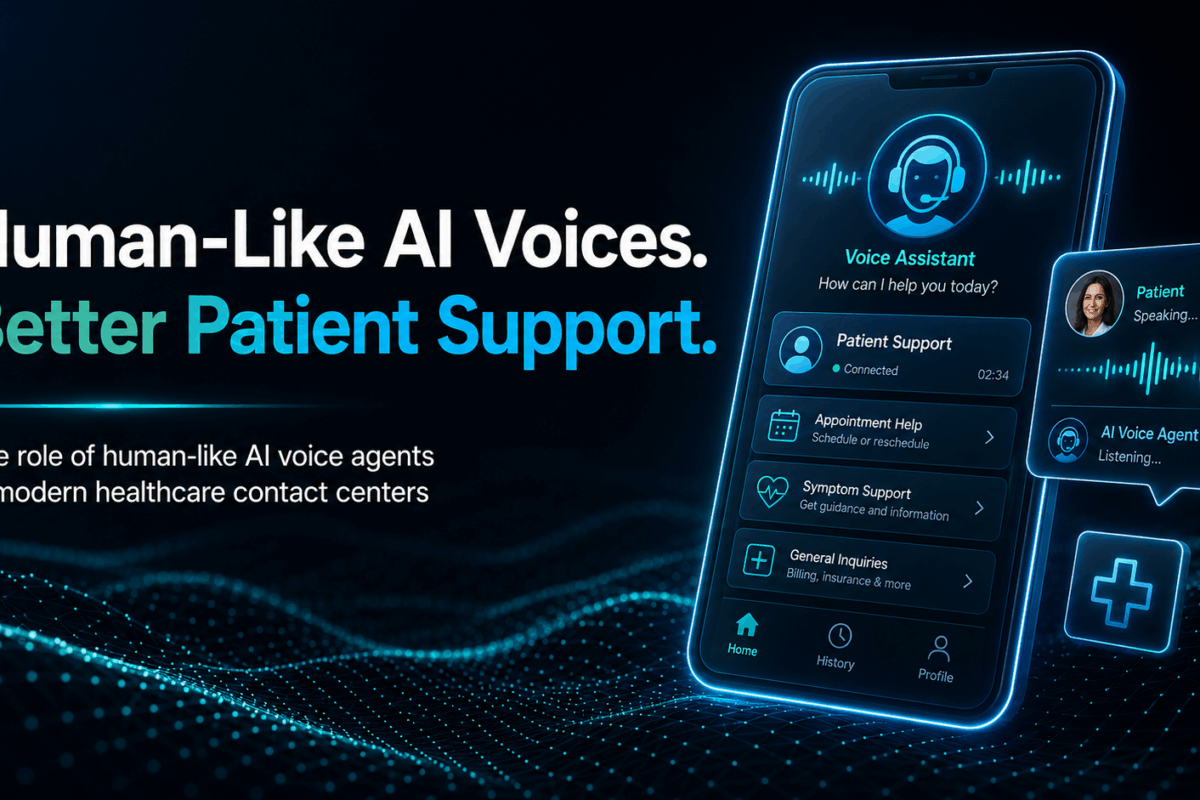
This article explores the role of human-like AI voice agents in healthcare contact centers and how they are transforming patient communication through more natural and efficient interactions.
Understanding Human-Like AI Voice Agents
Human-like AI voice agents are intelligent systems designed to communicate with callers using natural conversations. They use advanced technologies such as artificial intelligence, natural language processing, speech recognition, and machine learning to understand spoken language and respond in a way that feels more human.
Traditional automated systems usually rely on rigid menu options. Patients are often required to listen to multiple prompts and press specific numbers before reaching the information they need. This process can be time-consuming and frustrating, especially for elderly patients or individuals who may already be stressed due to health concerns.
Human-like AI voice agents work differently. Instead of forcing callers to navigate complex menus, they allow patients to speak naturally. The AI understands the request, processes the information, and provides relevant assistance through a conversational interaction.
For example, a patient can simply say:
“I would like to schedule an appointment with a cardiologist next week.”
The AI voice agent can understand the request and guide the patient through the booking process without requiring multiple menu selections. This conversational approach creates a smoother and more user-friendly experience for healthcare callers.
Why Patient Experience Matters in Healthcare Contact Centers
Patient experience plays a critical role in healthcare services. Every interaction between a healthcare provider and a patient contributes to the overall perception of care quality.
Phone communication is often one of the first points of contact between patients and healthcare organizations. A positive calling experience can build trust and confidence, while a frustrating experience may negatively affect patient satisfaction.
Many patients contact healthcare providers during stressful situations. They may be dealing with illness, medical concerns, treatment questions, or urgent healthcare needs. In these moments, clear and efficient communication becomes especially important.
Human-like AI voice agents help improve patient experience by making interactions feel more natural and less robotic. Patients can communicate in their own words instead of adapting to a rigid phone system.
This familiarity helps reduce frustration and creates a more comfortable environment for individuals seeking assistance.
Moving Beyond Traditional Automated Phone Menus
Traditional interactive voice response systems have been widely used in healthcare contact centers for many years. While these systems can help manage large call volumes, they often present several limitations.
Patients frequently encounter lengthy menu structures that require them to select multiple options before reaching the appropriate department. In many cases, callers must listen carefully to a long list of instructions and repeat the process if they select the wrong option.
These experiences can increase caller frustration and lead to longer call times.
Human-like AI voice agents offer a more advanced alternative. Instead of asking callers to navigate menus, they engage directly in conversation.
Patients can explain their needs naturally, such as:
- Scheduling appointments
- Confirming appointment times
- Requesting clinic information
- Asking about office hours
- Updating personal details
- Seeking general service information
The AI can understand intent and guide the caller accordingly.
This shift from menu-based navigation to conversational interaction creates a more efficient and patient-centered communication experience.
Natural Language Understanding Improves Communication
One of the most valuable capabilities of human-like AI voice agents is natural language understanding. People do not always speak in the same way. Different patients may describe the same request using different words, accents, speaking styles, or sentence structures.
For example, patients might say:
- “I need to see a doctor.”
- “Can I book an appointment?”
- “I want to schedule a checkup.”
- “I’d like to visit a physician next week.”
Human-like AI systems are designed to recognize these variations and identify the underlying intent. This flexibility allows patients to communicate naturally without worrying about using specific keywords or phrases.
As a result, conversations feel more intuitive and less restrictive compared to traditional automated systems. Healthcare organizations can benefit from smoother interactions while patients enjoy a more convenient calling experience.
Providing Consistent Support Around the Clock
Healthcare contact centers often receive calls outside regular business hours. Patients may need information in the evening, during weekends, or on public holidays. Maintaining 24-hour support with human agents alone can be challenging and costly.
Human-like AI voice agents can provide continuous availability, ensuring that callers receive assistance whenever they need it. These systems can answer common questions, provide basic information, and assist with routine requests at any time of day.
Patients benefit from immediate responses rather than waiting until the next business day. Continuous availability also helps healthcare organizations improve accessibility and service consistency across all communication channels.
Reducing Patient Wait Times
Long waiting times are among the most common sources of frustration in healthcare contact centers. When call volumes increase, patients may spend significant time waiting to speak with an agent. During busy periods, delays can become even longer.
Human-like AI voice agents help address this challenge by handling a large number of routine interactions simultaneously. Because AI systems can manage multiple calls at once, they reduce bottlenecks and allow patients to receive assistance more quickly.
Faster response times contribute to improved patient satisfaction and a more efficient contact center operation. By automating routine conversations, healthcare organizations can better manage peak call periods without compromising service quality.
Supporting Healthcare Staff More Effectively
The purpose of AI voice agents is not to replace healthcare professionals. Instead, these systems help support staff by handling repetitive and routine interactions.
Healthcare contact center agents often spend a large portion of their time answering similar questions and processing basic requests.
Examples include:
- Appointment scheduling
- Appointment confirmations
- Clinic directions
- Office hours information
- Insurance-related guidance
- General service inquiries
When AI voice agents manage these routine tasks, human staff can focus on more complex conversations that require empathy, critical thinking, and specialized knowledge. This creates a better balance between automation and human expertise.
Healthcare organizations can improve productivity while ensuring that patients receive appropriate support for their specific needs.
Intelligent Escalation to Human Agents
One of the most important features of modern AI voice agents is their ability to recognize when human intervention is necessary.
Not every healthcare inquiry can be resolved through automation. Some situations involve complex questions, emotional concerns, or unique circumstances that require personalized assistance.
Human-like AI voice agents are designed to identify these situations and transfer callers to human representatives when needed.
For example, if a patient expresses confusion, frustration, or presents a request outside the AI’s capabilities, the system can escalate the interaction seamlessly. This approach ensures that patients receive the right level of support at the right time.
Rather than creating barriers, AI becomes a tool that helps direct patients to appropriate resources more efficiently. The combination of AI assistance and human expertise creates a stronger overall service experience.
Creating a More Comfortable Experience for Patients
Many people feel more comfortable speaking naturally rather than navigating automated menus.
Human-like AI voice agents contribute to a more welcoming experience by using conversational communication styles that resemble human interactions.
Patients can explain their needs in everyday language without memorizing commands or following complex instructions.
This familiarity can be especially beneficial for:
- Elderly patients
- Individuals with limited technical experience
- Patients experiencing stress or anxiety
- Callers seeking quick assistance
When interactions feel natural and straightforward, patients are more likely to have positive experiences with healthcare contact centers. Comfort and convenience play an important role in improving overall satisfaction.
Enhancing Communication Accuracy
Miscommunication can create challenges in healthcare environments. Traditional automated systems may fail to understand caller intentions if the patient does not follow specific menu paths. This can result in incorrect routing, repeated transfers, or unresolved inquiries.
Human-like AI voice agents use advanced language processing capabilities to better understand patient requests and identify the appropriate response.
By accurately interpreting spoken language, these systems help improve communication efficiency and reduce unnecessary confusion. Improved accuracy benefits both patients and healthcare organizations by creating smoother interactions and more reliable outcomes.
Managing High Call Volumes More Efficiently
Healthcare contact centers often experience periods of increased demand. Seasonal illnesses, public health events, vaccination campaigns, and healthcare emergencies can all contribute to sudden increases in call volume.
During these periods, maintaining service quality becomes more challenging. Human-like AI voice agents provide scalability that allows healthcare organizations to manage increased demand without significantly increasing staffing requirements.
The AI can handle large numbers of incoming calls while maintaining consistent performance. This flexibility helps organizations remain responsive even during periods of exceptionally high activity.
Patients receive timely assistance, and healthcare providers can maintain operational stability.
Supporting Multilingual Communication
Healthcare organizations often serve diverse populations with varying language preferences. Language barriers can create communication challenges that affect patient understanding and satisfaction.
Many advanced AI voice agents support multiple languages and can communicate with patients in their preferred language. This capability helps improve accessibility and promotes more inclusive healthcare communication.
Patients are more likely to understand information clearly when they can communicate comfortably in their native language. For healthcare providers operating in multicultural regions such as Dubai, multilingual communication support can be particularly valuable.
Data-Driven Insights for Continuous Improvement
Human-like AI voice agents can also provide valuable insights into patient interactions. Healthcare organizations can analyze conversation trends, frequently asked questions, and common service requests to identify opportunities for improvement.
These insights help contact center managers understand patient needs more effectively.
By examining interaction data, healthcare providers can:
- Improve communication strategies
- Optimize workflows
- Identify service gaps
- Enhance patient support processes
- Improve operational efficiency
Data-driven decision-making allows healthcare organizations to continuously refine their contact center performance.
How We Helped a Hospital Group Manage Growing Call Volumes with NOOR AI
A large hospital group was facing a continuous increase in patient calls across its contact center. Patients were reaching out for appointment scheduling, service inquiries, clinic information, and general support. As call volumes grew, the contact center team found it difficult to maintain fast response times while still delivering a high-quality patient experience.
The hospital needed a solution that could support their existing contact center by handling routine inquiries more efficiently, without affecting the quality of patient communication.
The Solution We Proposed
At INTEL-CS, we proposed NOOR AI as a human-like voice AI agent designed to support healthcare contact centers through natural conversations.
NOOR AI is built to interact with patients using natural language and a human-sounding voice. Unlike traditional automated phone systems that rely on rigid menus and keypad inputs, NOOR AI allows patients to speak freely and describe their needs in their own words.
The system understands intent, responds conversationally, and guides patients through the required process in a smooth and simple way. It also escalates complex cases to human agents whenever necessary, ensuring patients always receive the right level of support.
The Outcome
After evaluating the solution, the hospital leadership team was impressed with NOOR AI and approved its implementation.
Once deployed, NOOR AI began handling a large portion of routine patient calls, including appointment-related requests and general inquiries. This helped reduce pressure on human agents and improved overall call handling efficiency.
Patients benefited from quicker responses and a more natural calling experience, while the contact center team was able to focus more on complex and high-priority cases.
Senior leadership was highly satisfied with the results and decided to continue using NOOR AI alongside their existing contact center operations as part of a long-term support strategy.
This case demonstrates how we at INTEL-CS use human-like AI voice technology to help healthcare organizations manage growing communication demands while improving patient experience.
Conclusion
Human-like AI voice agents are playing an increasingly important role in modern healthcare contact centers. By moving beyond traditional automated phone menus, these systems create more natural, conversational, and patient-friendly experiences.
Their ability to understand natural language, provide immediate assistance, reduce wait times, support healthcare staff, and escalate complex cases to human representatives makes them a valuable communication tool.
As healthcare organizations continue seeking ways to improve patient engagement and service quality, human-like AI voice agents offer a practical solution that combines efficiency with accessibility.
By delivering familiar and comfortable interactions, these technologies help healthcare contact centers better meet the needs of modern patients while supporting more effective communication across the healthcare journey.