Cloud resilience is no longer a technical option for modern businesses. In 2026, companies in Dubai and across the UAE depend on cloud platforms for operations, customer service, data management, remote work, compliance, and digital growth. A single outage, cyberattack, or data loss event can stop business operations within minutes.
Organizations are now focusing on business resilience instead of basic cloud adoption. Business resilience means your company can continue operating during disruptions while protecting customer trust, business data, and operational continuity.
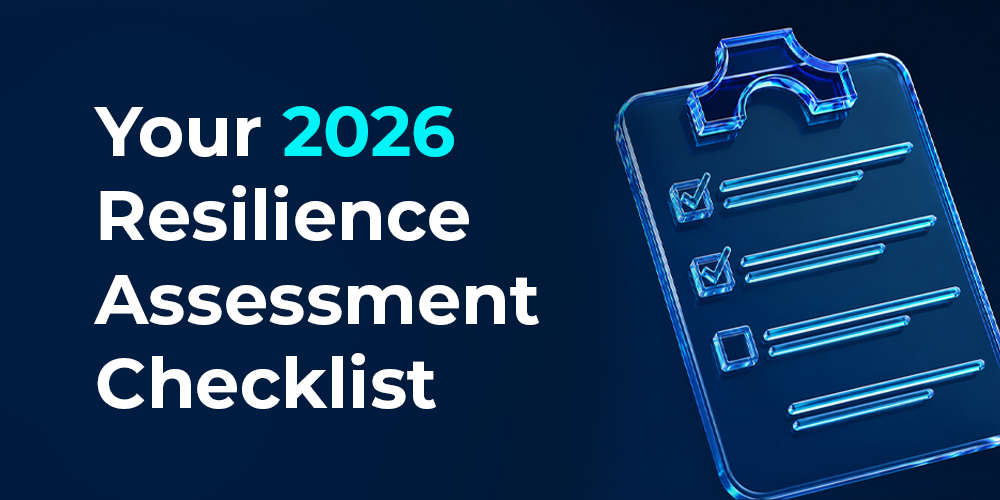
This cloud business resilience assessment checklist for 2026 helps businesses evaluate whether their cloud environment is prepared for modern risks, compliance requirements, and operational challenges.
The checklist in this guide is designed for business owners, IT managers, cloud consultants, and enterprise decision makers who want a practical framework for assessing cloud resilience, especially with support from service providers like iNTEL-CS that deliver cloud resilience and related consulting services.
1. Assess Your Cloud Infrastructure Stability
The first step is reviewing the stability and reliability of your cloud infrastructure.
Your business should evaluate:
- Current cloud providers
- Server performance
- Infrastructure scalability
- Geographic redundancy
- Load balancing capabilities
- Availability zones
- Resource monitoring systems
Ask these questions:
- Can your infrastructure handle traffic spikes?
- Do you have automatic failover systems?
- Is your infrastructure distributed across multiple regions?
- Are there single points of failure?
- How quickly can systems recover after disruption?
Businesses operating in Dubai often serve regional and international customers. Infrastructure reliability becomes essential for maintaining uninterrupted service. Cloud resilience starts with stable architecture.
2. Review Cloud Security Controls
Cybersecurity remains one of the biggest threats to cloud resilience in 2026. Your assessment should review all security layers protecting cloud systems and data.
Important areas include:
Identity and Access Management
Check whether:
- Multi-factor authentication is enabled
- User permissions follow least-privilege access
- Access reviews are performed regularly
- Privileged accounts are monitored
- Employee offboarding processes remove access immediately
Network Security
Evaluate:
- Firewalls and security groups
- VPN configurations
- Intrusion detection systems
- Zero trust architecture implementation
- Network segmentation policies
Endpoint Security
Review:
- Device management systems
- Antivirus and endpoint detection tools
- Remote device security
- Mobile access policies
Encryption Standards
Ensure:
- Data is encrypted at rest
- Data is encrypted in transit
- Encryption keys are managed securely
- Sensitive information follows compliance requirements
Strong security controls reduce the risk of ransomware attacks, unauthorized access, and operational disruption.
3. Evaluate Backup and Recovery Systems
Backups are one of the most critical components of cloud resilience in Cloud Computing Solutions. Many businesses assume cloud providers automatically protect all data. This assumption creates major risks.
Your assessment checklist should verify:
- Backup frequency
- Backup automation
- Recovery point objectives
- Recovery time objectives
- Offsite backup storage
- Immutable backup capabilities
- Backup testing procedures
Questions to ask include:
- How often are backups performed?
- Are backups protected against ransomware?
- How quickly can data be restored?
- Have backup systems been tested recently?
- Can critical applications recover within acceptable timelines?
Businesses should also test restoration procedures regularly instead of assuming backups will work during emergencies.
4. Assess Disaster Recovery Planning
Disaster recovery planning focuses on restoring operations after major disruptions. A disaster recovery assessment should evaluate whether the organization can recover from:
- Cyberattacks
- Data corruption
- Infrastructure failure
- Natural disasters
- Human error
- Power outages
- Cloud provider failures
Your checklist should include:
Recovery Documentation
Ensure disaster recovery plans are:
- Clearly documented
- Updated regularly
- Accessible during emergencies
- Shared with relevant teams
Recovery Testing
Check whether:
- Disaster recovery drills are performed
- Simulated outages are tested
- Recovery timelines are measured
- Weaknesses are documented and corrected
Communication Planning
Businesses should define:
- Incident communication procedures
- Internal escalation paths
- Customer notification processes
- Vendor coordination plans
Organizations without tested Disaster Recovery Solutions and disaster recovery plans often experience longer downtime and higher financial losses.
5. Review Compliance and Regulatory Readiness
Compliance requirements are becoming increasingly important for businesses operating in Dubai and the UAE.
Cloud resilience assessments should evaluate whether systems align with:
- UAE data protection regulations
- Industry-specific standards
- International security frameworks
- Data residency requirements
- Privacy regulations
Key compliance assessment areas include:
- Data retention policies
- Audit logging systems
- Security monitoring
- Access control documentation
- Vendor compliance certifications
- Incident reporting procedures
Businesses handling financial, healthcare, or customer-sensitive data must prioritize compliance as part of resilience planning. Failure to meet regulatory expectations can lead to operational restrictions, legal risks, and reputational damage.
6. Analyze Vendor and Third-Party Risks
Modern cloud environments rely heavily on third-party providers to run daily business operations. These providers support infrastructure, applications, security, and data services. While this improves efficiency and scalability, it also introduces dependency risks that can affect cloud resilience if not properly managed.
Common third-party dependencies include:
- Cloud hosting providers
- SaaS applications
- Security vendors
- Managed service providers
- Data processing partners
If any of these services fail or experience disruption, business operations can be directly impacted. This is why vendor risk assessment is a key part of cloud resilience planning.
A resilience assessment should review the following areas:
Vendor Reliability
Vendor reliability determines how stable and dependable a service provider is over time.
Evaluate:
- Service level agreements (SLAs) and guaranteed uptime
- Historical performance and downtime records
- Support responsiveness during incidents
- Financial stability of the vendor
- Geographic infrastructure coverage and redundancy
Reliable vendors reduce the risk of unexpected service interruptions and improve overall system stability.
Security Standards
Security practices of vendors directly affect your own cloud environment.
Verify:
- Industry security certifications and standards compliance
- Data protection and handling policies
- Encryption methods for stored and transferred data
- Incident response procedures and timelines
- Regular security audits and updates
Weak vendor security can become a direct entry point for cyber threats.
Dependency Risks
Vendor dependency risk refers to how much your business relies on a single provider or service.
Ask:
- What happens if a vendor experiences downtime?
- Is there an alternative provider available if needed?
- Can systems be migrated quickly in case of failure or breach?
- Are critical services overly dependent on one vendor?
High dependency on a single provider can create operational bottlenecks and increase business risk.
A strong cloud resilience strategy always includes backup plans, alternative options, and clear exit strategies for critical third-party services.
7. Assess Business Continuity Readiness
Business continuity focuses on maintaining operations during disruptions. This area goes beyond IT systems.
A business continuity assessment should evaluate:
- Remote work readiness
- Employee communication systems
- Operational redundancy
- Process documentation
- Critical workflow dependencies
- Leadership response planning
Key questions include:
- Can employees work remotely during emergencies?
- Are critical business processes documented?
- Can customer support continue during outages?
- Are alternative communication channels available?
Businesses in Dubai increasingly operate in fast-moving digital environments where service interruptions affect customer expectations immediately. Business continuity planning ensures operational stability under pressure.
8. Evaluate Cloud Monitoring and Incident Response
Continuous monitoring helps organizations identify threats before they become major incidents. Your resilience assessment should review:
Monitoring Systems
Check whether:
- Cloud environments are monitored 24/7
- Alerts are automated
- Security events are logged
- Performance analytics are available
- Threat detection systems are active
Incident Response Capabilities
Assess:
- Incident response procedures
- Escalation workflows
- Security response teams
- Forensic investigation processes
- Response time performance
Security Visibility
Organizations should know:
- Which systems are most vulnerable
- Where unusual activity is occurring
- How incidents are tracked and resolved
Fast detection and response reduce the impact of operational disruptions.
9. Check Multi-Cloud and Hybrid Cloud Resilience
Many businesses in 2026 use multi-cloud or hybrid cloud environments to improve flexibility, performance, and vendor independence. While this approach has benefits, it also increases complexity and creates more points of failure if not managed properly.
A cloud resilience assessment should review how well these environments work together and whether they remain stable under stress.
Key areas to evaluate include:
- Cloud integration stability
- Cross-platform visibility
- Data synchronization processes
- Security consistency across environments
- Backup coordination
- Unified monitoring systems
Each of these areas ensures that different cloud platforms can operate smoothly without creating gaps in performance or security.
Important questions include:
- Are all cloud environments managed in a consistent way?
- Can workloads move between providers when needed?
- Are security policies standardized across all platforms?
- Is data synchronized correctly and securely across systems?
When multi-cloud environments are not properly managed, they often create hidden risks such as data inconsistency, security gaps, and operational delays. A resilience assessment helps identify these issues early and improve system reliability.
10. Review Employee Awareness and Training
Technology alone cannot ensure cloud resilience. Employees play a very important role in preventing security incidents and maintaining operational stability. Human error is still one of the most common causes of cloud security problems.
A resilience assessment should evaluate how well employees understand and follow security and cloud usage practices.
Key areas to assess include:
- Cybersecurity awareness training
- Phishing simulation programs
- Incident reporting knowledge
- Remote work security practices
- Password management policies
- Access control awareness
Each of these areas helps reduce risks caused by mistakes, weak security habits, or lack of knowledge.
Why this matters
Employees who are not properly trained can accidentally expose systems to threats such as phishing attacks, weak passwords, or unauthorized access. Even strong cloud systems can become vulnerable if users do not follow basic security practices.
Regular training improves awareness, strengthens response to threats, and helps build a more security conscious work culture. This directly improves overall cloud resilience and reduces avoidable risks.
11. Evaluate Data Governance and Management
Data governance is essential for long-term cloud resilience. Businesses should assess how data is:
- Stored
- Accessed
- Classified
- Protected
- Archived
- Deleted
Each stage is important because data moves continuously across cloud systems, applications, and third party platforms. A clear structure helps maintain control and reduces operational risks.
Key checklist items include:
Data Classification
Data classification helps businesses organize information based on sensitivity and importance.
Ensure:
- Sensitive data is clearly identified and labeled
- Access levels are controlled based on roles and responsibilities
- Critical business information is given higher protection
- Customer, financial, and operational data is separated properly
- Classification rules are documented and followed consistently
This reduces unauthorized access and improves security management.
Data Lifecycle Management
Data lifecycle management defines how data is handled from creation to deletion. It helps avoid unnecessary storage and reduces risk over time.
Review:
- Data retention schedules are clearly defined
- Archiving procedures are in place for older data
- Secure deletion policies are applied when data is no longer needed
- Storage systems are optimized for performance and cost
- Data is reviewed regularly to remove unused information
Proper lifecycle management improves efficiency and reduces storage risks.
Data Integrity
Data integrity ensures that information remains accurate and reliable throughout its use.
Verify:
- Data validation systems are working correctly
- Corruption detection tools are active
- Version control mechanisms are in place
- Backup data matches live production data
- Regular integrity checks are performed
Strong data integrity supports better decision making and stable business operations. Overall, good data governance improves security, compliance, and operational continuity in cloud environments.
12. Assess Operational Scalability
Cloud resilience also depends on scalability. As businesses grow, cloud environments must adapt without affecting performance.
Your assessment should evaluate:
- Resource scaling capabilities
- Traffic management systems
- Storage expansion readiness
- Application performance optimization
- Cost management controls
Questions to consider:
- Can systems handle seasonal demand increases?
- Is automatic scaling configured correctly?
- Are cloud costs monitored effectively?
- Can applications support future growth?
Scalable cloud infrastructure improves operational resilience during periods of rapid expansion.
13. Review Ransomware Preparedness
Ransomware is still one of the most serious threats for cloud based businesses in 2026. It can lock systems, encrypt files, and stop daily operations very quickly. A cloud resilience assessment should include a basic but clear review of how prepared the organization is to handle such attacks.
Key areas to check include:
- Immutable backups that cannot be altered or deleted by attackers
- Threat detection systems that identify unusual behavior early
- Endpoint protection across all devices, servers, and remote systems
- Employee awareness training to reduce phishing and unsafe clicks
- Access restrictions using least privilege principles
- Regular recovery testing to confirm backups actually work
- Continuous security monitoring across cloud environments
It is also important that organizations have simple and clear planning for:
- Incident response steps during a ransomware attack
- Communication process for internal teams and key stakeholders
- Recovery priorities for critical systems and business services
- Legal and compliance responsibilities during security incidents
Good ransomware preparedness reduces downtime, limits data loss, and helps the business recover faster with less operational impact.
14. Measure Recovery Objectives
Every organization should clearly define recovery expectations as part of cloud resilience planning. These targets help measure how quickly systems must recover and how much data loss is acceptable during disruptions.
Two key metrics are used:
Recovery Time Objective (RTO)
RTO defines the maximum acceptable time required to restore systems after an outage. It focuses on how long the business can tolerate downtime before operations are affected.
Recovery Point Objective (RPO)
RPO defines the maximum acceptable amount of data loss measured in time. It shows how far back data can be restored without causing serious business impact.
Your assessment should evaluate:
- Whether recovery targets are realistic for current infrastructure
- Whether systems can actually meet defined RTO and RPO values
- Whether backup frequency supports required recovery goals
- Whether disaster recovery processes are tested regularly
In many cases, businesses discover that their recovery expectations are higher than what their systems can actually deliver, which creates risk during real incidents.
15. Perform Regular Cloud Resilience Audits
Cloud environments are always changing due to new applications, updates, users, integrations, and third party services. Because of this, cloud resilience cannot be treated as a one time setup.
Regular resilience audits help organizations stay prepared and stable.
These audits help businesses:
- Identify new vulnerabilities introduced by system changes
- Review whether security and backup policies are still effective
- Test disaster recovery and system restoration readiness
- Evaluate compliance with updated regulations and standards
- Improve overall system performance and reliability
A proper audit should review security controls, backups, recovery plans, access management, and vendor dependencies.
Cloud resilience requires continuous monitoring and improvement. Regular audits ensure the system remains strong, secure, and ready for unexpected disruptions.
Final Thoughts
Cloud resilience is no longer limited to large enterprises. Businesses of all sizes now depend on cloud platforms for daily operations, customer engagement, communication, and data management.
As cyber threats, operational disruptions, and compliance requirements continue evolving, organizations need a structured approach to assessing cloud resilience.
This cloud business resilience assessment checklist for 2026 provides a practical framework for identifying weaknesses, improving recovery readiness, and supporting long-term operational stability.
The most resilient businesses are not the ones that avoid disruption completely. They are the organizations that prepare effectively, respond quickly, and recover confidently.
Regular cloud resilience assessments help businesses reduce risks, improve continuity, strengthen security, and maintain customer trust in an increasingly digital business environment.
FAQs
What are the cloud security trends in 2026?
Cloud security in 2026 is focused on stronger automation, AI based threat detection, and zero trust architecture. Businesses are also improving identity and access management, using better encryption methods, and applying continuous security monitoring to reduce risks.
How to scale your business in 2026?
Businesses scale in 2026 by using cloud based infrastructure that supports automatic scaling, optimizing costs, improving system performance, and expanding digital operations. Employee training and strong data management also support long term growth.
What are the 9 points checklist for endpoint controls?
The main endpoint control checklist includes:
- Device authentication
- Multi factor authentication
- Antivirus and malware protection
- Regular patch updates
- Data encryption
- Secure remote access
- Application control
- Endpoint monitoring
- Incident reporting
What are the business continuity trends in 2026?
Business continuity in 2026 focuses on cloud based recovery systems, remote work readiness, AI driven monitoring, faster disaster recovery, and regular testing of failure scenarios. Businesses are also integrating cybersecurity with continuity planning.
What are the 4 pillars of cloud security?
The four pillars of cloud security are identity and access management, data protection, network security, and compliance governance. These pillars help maintain secure and controlled cloud environments.
What are the Azure trends in 2026?
Cloud platforms like Microsoft Azure are focusing on hybrid cloud expansion, AI integration, serverless computing, stronger security features, and advanced analytics. These trends support scalability and enterprise level cloud adoption.